
Product family
Sheet Metal Brackets
Mounting brackets, reinforcement plates and clips in steel, stainless and aluminium – laser cut, formed and finished to ±0.10 mm.
Direct answer: we make sheet metal brackets from 0.5 to 6 mm mild steel, galvanised steel, stainless steel and aluminium, laser cut and CNC formed to ±0.10 mm and ±0.5°, then powder coated, zinc plated or left bare as the drawing requires. Brackets are quoted from one piece for prototypes to tens of thousands per year.
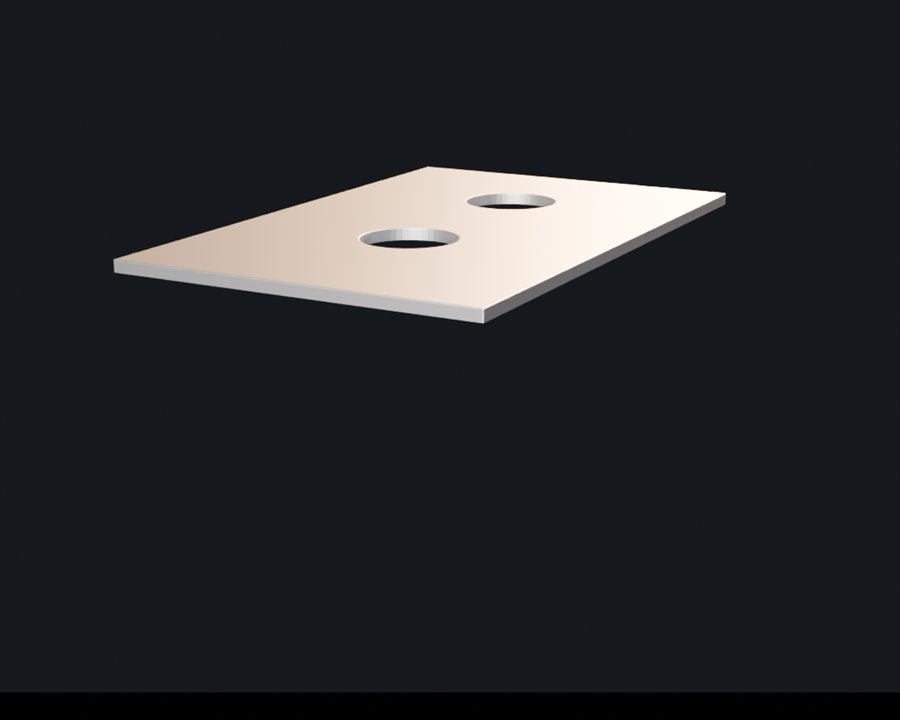
Types we make
- L, U and Z brackets with multiple bends and slot patterns
- Reinforcement and stiffening plates
- Cable and pipe clamps, retaining clips and spring clips
- Mounting plates with PEM inserts, weld nuts or rivet nuts
- Adjustable brackets with slots and serrated faces
- Welded bracket assemblies with fixture holes
Specification range
| Parameter | Range / value | Note |
|---|---|---|
| Material | SPCC, SGCC, 304, 316L, 5052, 6061 | Grade stated on the drawing |
| Thickness | 0.5 – 6 mm | Laser cut plate up to 12 mm |
| Size | Up to 3000 x 1500 mm | Larger parts quoted as welded assemblies |
| Forming | ±0.10 mm, angle ±0.5° | ±0.05 mm on short flanges with fixtures |
| Hole position | ±0.10 mm | Tighter with a jig-bored or laser datum hole |
| Finish | Zinc 5 – 15 µm, powder coat 60 – 100 µm, bare | Threads and earth points masked on request |
Process route
1. Cutting
Fibre laser cutting with nesting that keeps bend lines clear of holes and part edges.
2. Deburring
Edges deburred so handling is safe and coating adhesion is not affected by rolled-over burrs.
3. Forming
CNC press brake with bend positions taken from the drawing datum; bend allowance calculated for the actual material and thickness.
4. Hardware
PEM inserts, rivet nuts and weld studs installed before finishing so the finish is not damaged afterwards.
5. Finishing
Zinc plating, powder coating or passivation, with masking where threads and earth points must stay conductive.
6. Inspection
Critical hole positions and bend angles measured against the drawing; coating thickness checked per batch.
Design rules
- Keep hole-to-bend distance at least 2.5 x thickness plus the bend radius; closer holes distort during forming.
- Add bend reliefs at the ends of bend lines to prevent tearing.
- Use one material thickness per bracket where possible – each gauge change adds a set-up.
- Define the mounting holes relative to a datum, not to the sheet edge, so tolerance does not stack.
- Specify which faces are cosmetic; coating defects on hidden faces can then be accepted instead of reworked.
- If the bracket carries load, state the load and the fixing method so the thickness is chosen sensibly.
Frequently asked questions
Can you make a bracket from a sample without a drawing?
Yes – the sample is measured and a drawing is created for your approval before production. For parts with tolerances tighter than ±0.20 mm we recommend supplying the drawing, because a worn sample can put the new part out of specification.
What is the most economical bracket quantity?
Laser cut and formed brackets are economical from one piece to a few thousand per year. Above roughly 10,000 pieces a year, a stamped bracket with a die is usually cheaper, and we quote both routes so the crossover is visible.
Do you install hardware such as rivet nuts?
Yes, PEM inserts, rivet nuts, weld nuts and studs are installed before finishing, so the coating is not cracked afterwards. Threads are masked when they must stay conductive or free of coating.
Send the bracket drawing
Include the finish, the hardware and the annual volume. For volume parts we quote both the laser route and the stamped route.