Capability
Laser Cutting Services
Fibre laser cutting of sheet metal and plate with clean edges, tight nesting and short lead times – cutting, bending, tapping and finishing from one supplier.
- Since 1991Metal parts made in our own factory
- 60+ machinesPresses, laser cutters, CNC centres and casting machines
- ISO 9001 + IATF 16949Certified quality management system
- 24-hour quotationDrawing review and DFM feedback on weekdays
Parts we produce
- Flat brackets, plates, gaskets and shims
- Enclosure panels, covers and front plates with cutouts
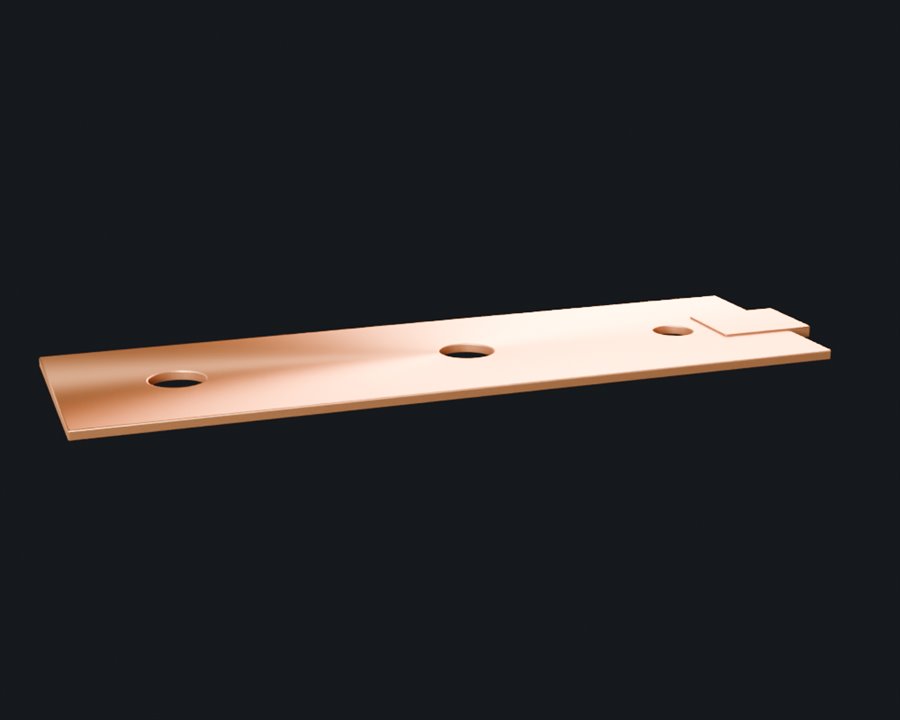
- Busbar shapes, terminal plates and conductive flat parts
- Frames, grilles, guards and ventilation plates
- Prototype and pre-production flat parts before a stamping die is cut
- Laser cut parts combined with bending and welding in a sub-assembly
Capability at a glance
| Carbon steel | Up to 12 mm thickness, cut edge clean and square |
|---|---|
| Stainless steel | Up to 8 mm thickness, oxide-free cutting available for weld-ready edges |
| Aluminium | Up to 6 mm thickness |
| Copper and brass | Up to 4 mm thickness (high reflectivity materials cut with dedicated parameters) |
| Maximum sheet size | 3000 x 1500 mm, nesting optimised to reduce material waste |
| Cutting tolerance | ±0.1 mm typical, ±0.05 mm on thin and small contours by agreement |
| Kerf | 0.1 – 0.3 mm depending on material and thickness |
| Minimum hole | Equal to material thickness for a clean hole without taper marks |
| Lead time | 3-7 working days for laser cutting, plus bending and finishing where required |
Materials we work with
| Material | Typical range and notes |
|---|---|
| Mild steel | SPCC, SPHC, Q235, 1008/1010 – general fabrication, economical, easy to weld |
| Galvanised steel | SECC, SGCC, DX51D – corrosion resistant, used for panels and enclosures |
| Stainless steel | 304, 316, 316L, 430 – food, chemical and outdoor applications |
| Aluminium | 5052, 6061, 1060 – light weight brackets, panels and heat management parts |
| Copper and brass | C11000, C2680, C2801 – conductive parts, busbars and contacts |
| Surface finish | Deburring, brushing, zinc or nickel plating, powder coating, anodising, laser marking |
How the process runs
1. File check and nesting
DXF, DWG or STEP files are checked for open contours, duplicate lines and scale errors, then nested so that material usage is minimised and the quoted price stays realistic.
2. Cutting parameter setup
Material, thickness, edge quality and tolerance decide the nozzle, gas, focus and power settings. Weld-ready edges are cut oxide-free where the part is going to be welded.
3. Cutting
Parts are cut on fibre laser equipment with the contour, holes and slots produced in one pass, including engraved part numbers and logos where required.
4. Deburring and secondary forming
Edges are deburred by hand or by machine, then parts are CNC bent, tapped, countersunk or fitted with hardware as needed.
5. Finishing
Plating, powder coating, anodising, brushing or laser marking are applied before packing.
6. Inspection and packing
Critical dimensions are measured against the drawing, then parts are counted, protected and packed with a packing list.
Design for manufacture: what to check before you send the drawing
- Keep the minimum hole diameter at least equal to the material thickness. Smaller holes in thick material are possible but may need drilling instead.
- Keep holes at least one material thickness away from the outside edge to avoid heat distortion and a weak edge.
- Cut edges have a very small taper. Where a press fit or a sealing face is required, specify a machined feature instead of a cut edge.
- Very sharp internal corners are difficult to achieve with a round laser beam. Use a small radius in the corner.
- Check the DXF for duplicate and open entities. These are the most common cause of a quotation delay.
- Group parts of the same material and thickness in one order to reduce set-up cost and material waste.
- Tell us if the part will be welded. Oxide-free cutting parameters are different from standard cutting and must be specified before production.
Quality control
The factory operates a quality management system certified to ISO 9001 and IATF 16949. Inspection records, material certificates and coating reports travel with the shipment.
| Stage | What is checked |
|---|---|
| Incoming material | Material type and thickness verified before cutting, mill certificates available on request |
| Programme verification | First-off part measured against the drawing before the batch is released |
| In-process | Periodic dimension checks on critical contours and hole positions |
| Edge quality | Visual check for dross, burr and heat marks, with oxide-free cutting for weld joints |
| Final inspection | Dimensional report for critical features, flatness check for large thin panels |
| Traceability | Part number, material and batch marked or labelled on the package |
FAQ
Which file format is best for laser cutting?
DXF or DWG for 2D cutting, drawn 1:1 with a single closed contour per part. STEP is also accepted. Remove dimensions, borders and multiple parts on one sheet unless you want them nested together.
How thick can you cut?
Up to 12 mm carbon steel, 8 mm stainless steel, 6 mm aluminium and 4 mm copper or brass. Thickness capability changes with the material, so send the drawing for a definite answer.
Can you bend the parts after cutting?
Yes. Cutting, bending, tapping, countersinking and hardware insertion are done in one factory, which keeps the formed part within tolerance instead of leaving the last operation to someone else.
Is laser cutting cheaper than stamping?
For low and medium volumes, yes, because there is no die to amortise. From roughly 10,000 pieces per year, stamping usually becomes cheaper per part and will be recommended when your volume justifies it.
How do you avoid burrs on laser cut parts?
By choosing the right cutting parameters for the material and thickness, and by deburring afterwards. For parts with a handling or fit requirement, specify the acceptable burr and we will include deburring in the process.
Can you cut copper and brass?
Yes. Copper and brass are reflective materials that require dedicated fibre laser parameters, and they are within our normal capability up to 4 mm thickness.
Send your drawing, get a quote in 24 hours
STEP, DWG, DXF, PDF or a rough sketch is enough to start. You receive a price, lead time and DFM feedback – no obligation.
Related: materials · tolerances by process · quality control · EV battery and busbar · Copper busbars